
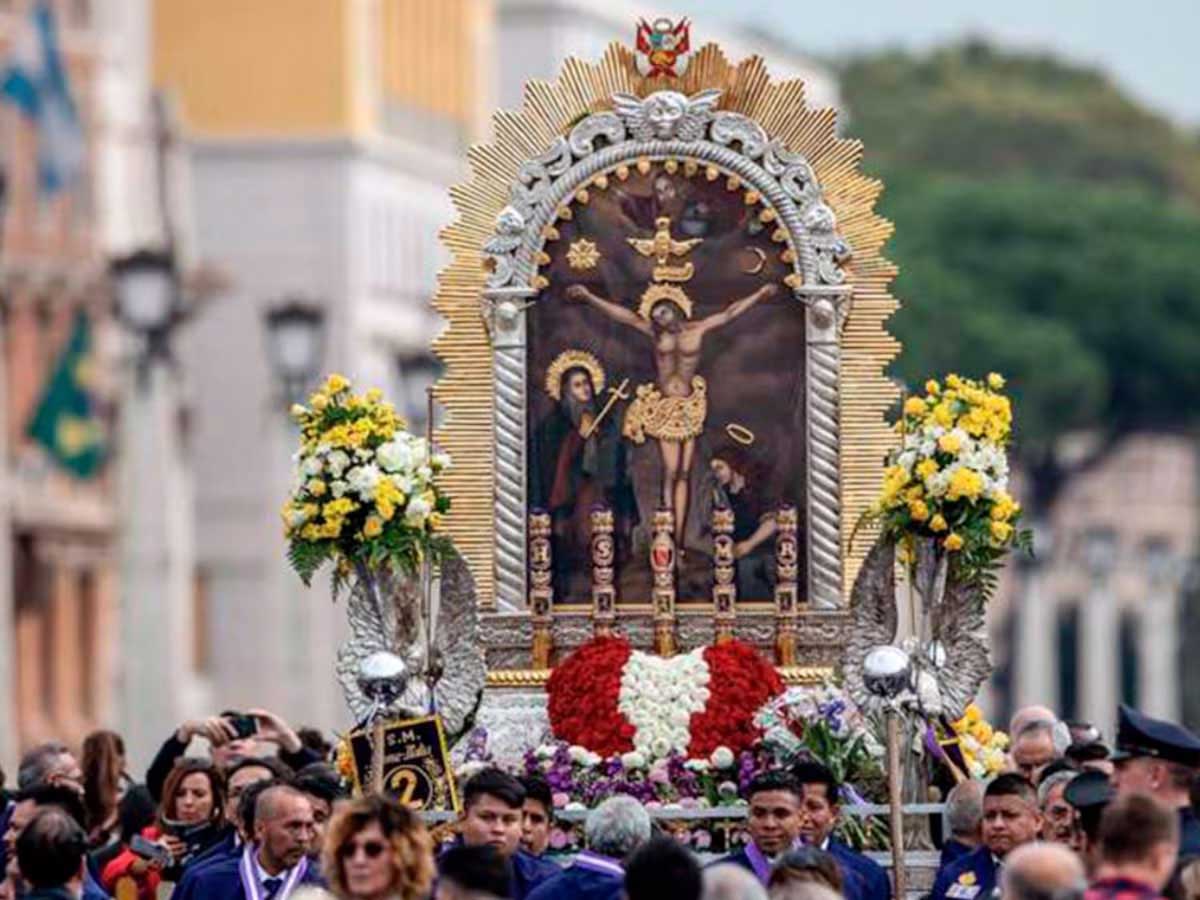
Every October, Lima turns purple. Thousands of faithful dressed in purple habits accompany the image of the Señor de los Milagros (Lord of Miracles) through the streets of the city, in one of the largest Catholic processions in the world. That is why October is known in Peru as the Purple Month.
The origin of the image
In the 17th century, an Angolan slave painted an image of the crucified Christ on an adobe wall in the Pachacamilla neighborhood, where many people of African descent lived. In 1655 a strong earthquake destroyed much of Lima, but the wall with the image remained standing. The same happened in the great earthquake of 1687. From then on, people began to venerate the image as miraculous, and its devotion spread throughout the city and the country.
The procession
Since the wall cannot be moved, a copy of the image painted on canvas is carried in procession on a large silver litter weighing about two tons. It is carried by the cargadores (bearers) of the Brotherhood of the Lord of Miracles, accompanied by singers, incense, purple-robed faithful and thousands of people. The procession leaves from the Church of Las Nazarenas, where the original wall is kept, on several days in October, and each route lasts many hours.
Turrón de Doña Pepa
October is also the month of the turrón de Doña Pepa, a sweet made of layers of shortbread covered with honey and colorful sprinkles. According to tradition, it was created by a woman who was cured of paralysis after praying to the Lord of Miracles.
Experience the tradition
If you visit Lima in October, ask us how to include a visit to the Church of Las Nazarenas or watch part of the procession during your Lima Private City Tour.